A Look into the Acalanes Club Rugby Team
By Lily Foster and Savannah Martinez, Staff Writers
Courtesy Photos by Brian Mikalis
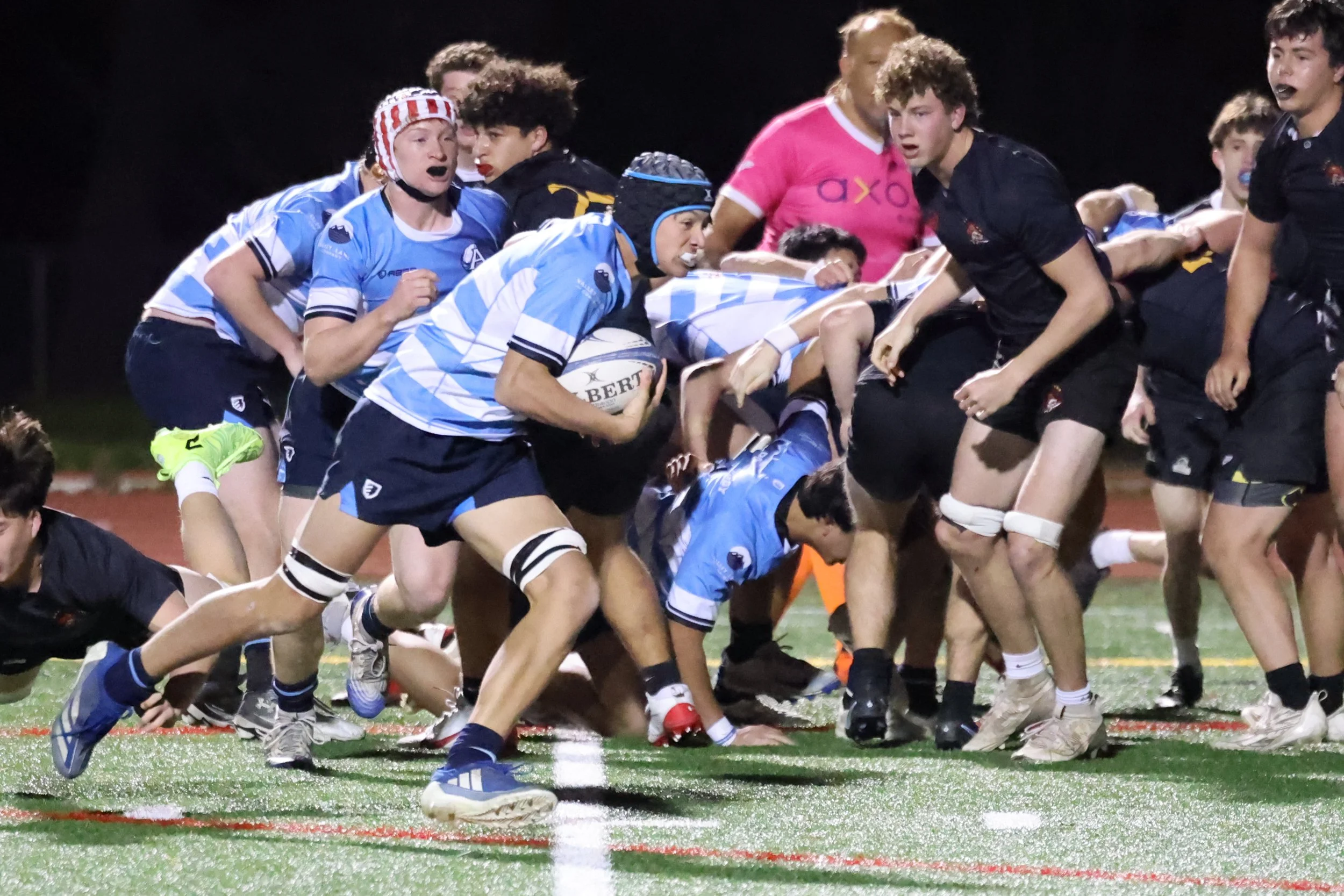
The Acalanes Club Rugby team (1-1) has opened its second season in an official league with new competition.
In 2024, Acalanes students with a shared interest in rugby created an opportunity for peers to find community through the sport of rugby.
These students took initiative and started the Acalanes Rugby Club, now led by President Thomas Parrot, Vice President Daniel Dunne, Secretary Graham Welton, and Treasurer *Will Miller. Their club became an official school-affiliated organization.
“There is Acalanes Rugby Club, which is a school club, and their team is called Don's Rugby,” head coach Matt Welton said. “We are what we would call an affiliated organization of the school. So we're not a school sport; we're an affiliated club sport that is composed of 100 percent Acalanes students.”
Although the rugby team is not an official varsity team on campus, they put in the same level of effort in practices and games.
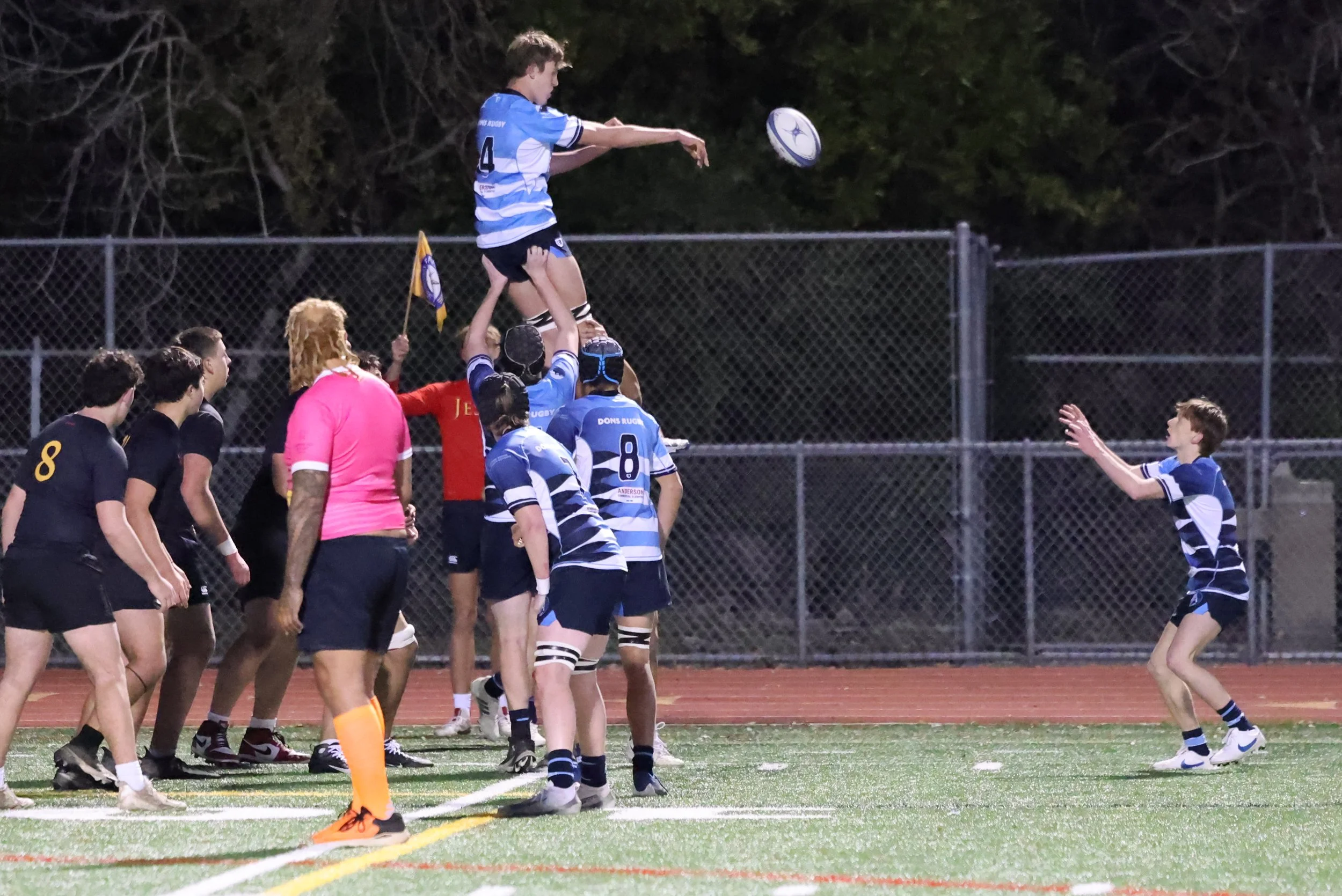
“We operate the same way that a varsity sport on campus would operate, but we just don't have clearance from the district to be a varsity sport, and so we have a student board...,” senior Bryce Birdsong said. “We have mandatory practices almost every day, and games on the weekends, and we have weight room access the same way that other varsity sports do.”
The difference between the two affects the program's funding and facilities. The club pays reduced rates for field space to host practices and games.
“We get discounted field rates, and when we rent this field, and we rent the home field, we rent those through our fundraising efforts,” Matt Welton said. “So that's a big difference between us and school sports, which is that we pay for facilities.”
The club began with casual games against local school rugby clubs in its first season, and officially joined league play for the 2025-2026 season.
“Last season, we played as what we would call an at-large team in the competition,” Welton said. “So we played friendly matches where we weren't actually officially in the league. This year, we're officially in what's called the Single School Northern California Rugby League, and we're playing in the first division.”
Since the team’s first year, the team has seen continued growth in new members.
“It's a very young team, but it's continuing to grow,” Birdsong said. “We have more people this year than we had last year, more seniors. And we're really happy about all the underclassmen that are joining as well.”
Along with increased competition compared to last year, the team plans to focus on developing newer players, growing the team, and achieving success.
“A few goals that we have for our season are to really develop the frosh playing and the first-year players, and also to have more people come in as the seasons go by and to win out our section,” Bordi said.
On Jan. 10, they participated in the annual Lamo Classic preseason tournament, and eight days later, they beat Dublin 29-14 in a preseason match. Their first loss came on Jan. 26 against Jesuit, a team ranked third in the nation. The Dons bounced back with a 21-12 win over Bellarmine. Future matches include a tour to Vancouver, Canada, for Presidents Day weekend, Bishop O’Dowd on Feb. 21 for their last match of the season before the Northern California Division One Championships on Mar. 7.
While many players join for the physicality and its similarity to football, the team culture is what keeps some committed.
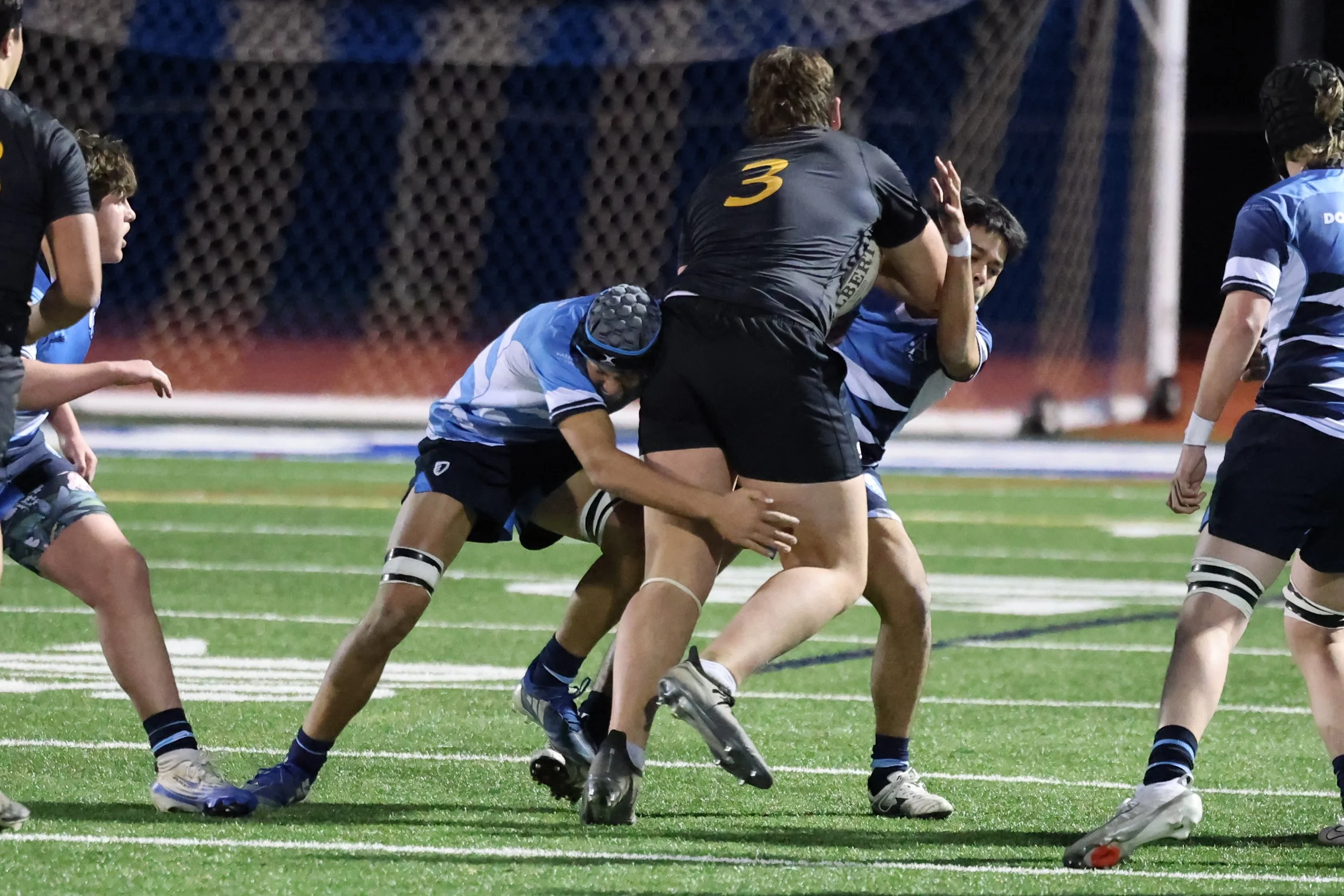
“Originally, I just did it to help with football, but the reasons definitely changed…,” frosh Jake Mikalis said. “Everyone on the team is super nice and super understanding; for example in our first scrimmage, a lot of the kids didn't really know what to do still since we’re new, but when we missed something ... they were just really kind about it, didn't say anything bad, and tried to correct it and help us out.”
Many players recognize the sense of community fostered beyond their own team.
“There's a better connection with the other teams we play, because in football, it's definitely a rivalry, but after rugby, we eat with the other team and have [team] lunches, everyone's super nice about it,” Mikalis said. “We also have a thing after where we talk about who we thought the man of the match was from the other team. So it's definitely more of a community, instead of just in your own team.”
As the club continues to grow, many feel that its success is rooted in the team culture.
“What's really apparent is that people love being on the rugby team, it’s a lot of fun,” Birdsong said. “There's that sense of community, and rugby is just a really special sport. There's absolutely no ego involved in rugby, as you sometimes get in other sports. Everyone on the field really is an equal contributor, everyone has a role, and everyone is cared for and coached up the same by all the coaches. Our success is that people enjoy being here, want to come back, and they tell their friends about it, and then their friends come out. That's what success looks like for a new program, aside from just winning games.”
*Blueprint would like to acknowledge that Will Miller is a member of the Blueprint staff